

The Technical Reality vs. Practical Reality
Yes, different gas blends have different densities, which technically affects flowmeter readings. Flowmeters are typically calibrated for pure argon, and when you switch to a heavier gas (like CO2) or lighter gas (like helium), the actual flow rate changes slightly.
But here's the thing: the differences are too small to matter for practical welding, and more importantly, too small to accurately adjust on most flowmeters anyway.
Let's Look at the Numbers
Here's how common gas blends compare when your flowmeter is calibrated for argon:
| Gas Blend | Theoretical Difference | Practical Impact |
|---|---|---|
| 100% Argon | Baseline | - |
| 75/25 Ar/CO2 | 1.25% less flow | Essentially none |
| 90/10 Ar/He | 4.8% more flow | Minimal |
What does this mean in real terms?
If you're running 20 CFH of pure argon and switch to 75/25, you're technically getting 19.75 CFH. That's a quarter of one CFH difference—which is impossible to adjust on a typical flowmeter anyway.
Even with 90/10 argon/helium, you're only getting about 1 extra CFH at a 20 CFH setting. Try adjusting your flowmeter by exactly 1 CFH and you'll see why this doesn't matter in practice.
Why You Don't Need to Adjust
1. Flowmeters aren't that granular
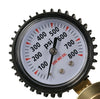
Most welding flowmeters have graduations of 2-5 CFH. Making a 1 CFH adjustment isn't realistically possible, and a 0.25 CFH adjustment is completely impossible.
2. Your flow rate has built-in margin
When you set your shielding gas at 15-20 CFH, you're already using more than the minimum required. The small variance from gas density is well within your coverage margin.
3. Other variables matter more
Wind, torch angle, travel speed, and cup size have a much bigger impact on shielding coverage than a 1-5% flow rate difference.
4. You're probably already making intuitive adjustments
Experienced welders already adjust flow based on what they see in the puddle—a little more for outdoor work, a little less for small parts. You're naturally compensating without thinking about gas density.
When Might It Actually Matter?
There are only a few scenarios where you'd even think about this:
High-volume helium use: If you're burning through expensive helium blends all day, every day, that extra 5% adds up over time. But even then, you'd adjust based on actual weld results, not calculations.
Extremely critical aerospace work: If you're doing mil-spec work with strict gas flow requirements, you'd likely have calibrated flowmeters for each specific gas anyway.
For 99% of TIG welders: Don't worry about it. Use the same flow rate settings you're comfortable with.
The Bottom Line for Different Blends
Switching from argon to 75/25 Ar/CO2
The difference is so small (1.25%) it's literally undetectable. Use the exact same flowmeter setting.
Switching from argon to 90/10 Ar/He
You're getting about 5% more flow, which sounds bigger but still only amounts to ~1 CFH at typical settings. Use the same setting unless you notice you're wasting gas or getting excessive flow.
Switching between any common shielding gases
Set your flowmeter based on what gives you good weld results. If your puddle is protected and you're not seeing oxidation, you're good.
The Real Takeaway
Gas density affects flowmeter readings in theory, but the differences between common welding gases are too small to practically adjust for—and your flowmeter isn't precise enough to make those tiny adjustments anyway.
Set your flow rate based on:
- What protects your puddle
- Your welding environment (indoors vs. outdoors)
- Your cup size and torch setup
- What you're welding
Don't overthink the gas density calculations. They're interesting from a technical standpoint, but they won't improve your welds.
Conclusion
Save your mental energy for the things that actually matter: tungsten prep, amperage settings, filler rod technique, and travel speed. Your flowmeter is already doing its job just fine across all common shielding gas blends.
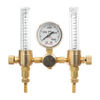
Looking for reliable flowmeters and regulators? Check out our selection of TIG welding gas equipment designed for consistent performance with any shielding gas blend.